






Being On Dialysis Doesn’t Mean Giving Up All The Things That You Love.
Get Your Life Back. Home dialysis could be your ticket to a healthier, better, longer life. Whether you’ve just been told you need dialysis or have been coping with kidney failure for years, as well as over the course of your kidney disease, it is important to know what treatment may be best for your health and quality of life.1-5
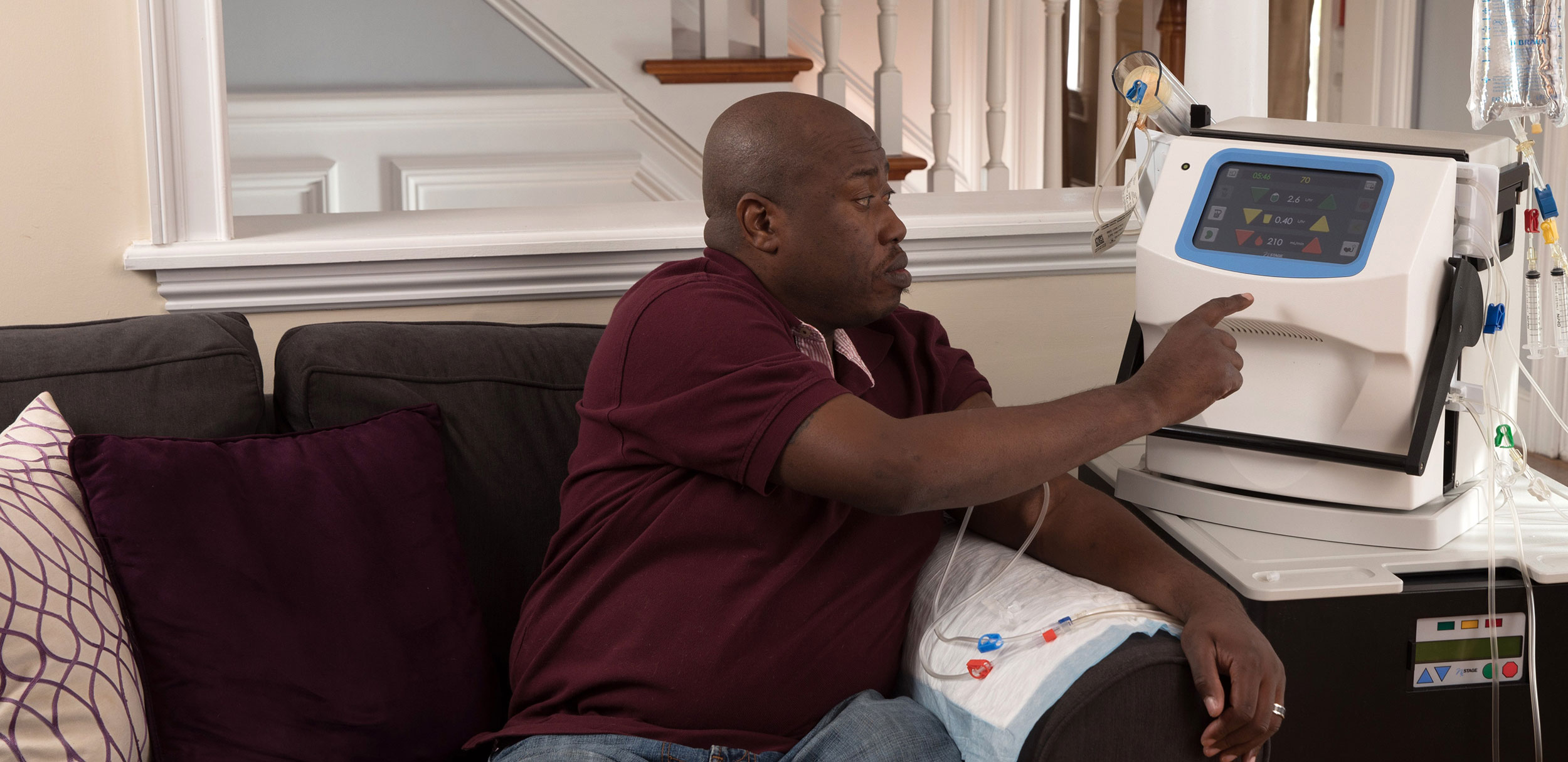

Find A Treatment Option That Works For You
You may have several options when it comes to treating kidney failure, including the type, location, frequency and duration of your treatments.
Learn about what options may be best for you now, as well as at later stages of kidney disease, to make educated decisions about what treatment works best for your health and lifestyle.

Why More Frequent Home Dialysis?
At NxStage, we’ve seen first-hand how patients have enjoyed improved health and a better quality of life through more frequent home dialysis. Learn how patients may experience health and quality of life benefits.
Home dialysis lets you perform your treatments in the comfort of your home, with options for treatments during the day, or even at night, while you sleep.
Not sure where to start? NxStage can help.




The reported benefits of peritoneal dialysis may not be experienced by all patients.
Peritoneal dialysis does involve some risks that may be related to the patient, center, or equipment These include, but are not limited to, infectious complications. Examples of infectious complications include peritonitis, and exit-site and tunnel infections. Non-infectious complications include catheter complication such as migration and obstruction, peritoneal leaks, constipation, hemoperitoneum, hydrothorax, increased intraperitoneal volume, respiratory, and gastric issues. It is important for healthcare providers to monitor patient prescriptions and achievement of adequacy and fluid management goals.
Patients should consult their doctor to understand the risks and responsibilities of performing peritoneal dialysis
The reported benefits of home hemodialysis may not be experienced by all patients.
Despite the health benefits that home and more frequent hemodialysis may provide to those with chronic kidney disease, these forms of therapy are not for everyone. Please review this information carefully and discuss it with your doctor as you evaluate your therapy options.
Personal and Partner Responsibility
Home hemodialysis with the NxStage System during the day may not require a care partner, provided a physician and a qualified patient agree that solo home hemodialysis is appropriate. Patients performing nocturnal treatments are required to have a care partner. Care partners are trained on and follow guidelines for proper operation. If you choose to do more frequent home hemodialysis, you will be responsible for complying with your dialysis prescription, which may require treatments up to six days per week.
If you choose to do home hemodialysis alone during the day, you will need to take on the responsibility for tasks that would normally be taken care of by staff when in-center. You will need to perform all aspects of dialysis treatment from start to finish, including equipment setup, needle insertions, responding to and resolving system alarms, and system tear-down after treatment. In addition, you must monitor your blood pressure, ensure proper aseptic technique is followed, and follow all the training material and instructions given to you by your training nurses. You will also be trained on and need to know how to respond to health emergencies that might happen during treatment at home, including dizziness, nausea, low blood pressure, and fluid or blood leaks.
Treatment Environment
You must ensure that you have a clean and safe environment for your treatments. You also need to set aside space in your home for the needed supplies.
Risks Associated with All Forms of Hemodialysis
All forms of hemodialysis involve some risks. These may include high blood pressure, fluid overload, low blood pressure, heart-related issues, vascular access complications, cramps, backache, headache, dizziness, nausea, an “off” taste in the mouth, fatigue, fever, chills, joint pain, itching, seizures or sinusitis.
All hemodialysis therapies also involve the use of medical devices that introduce the potential for additional risks including air entering the bloodstream, damage of red blood cells, inflammatory reactions, blood chemistry imbalances, blood loss due to clotting of the blood tubing set or accidental blood line disconnection or other leak, allergic reactions, and excess warming or cooling of the dialysate. In addition, dialysis patients may have other underlying diseases that may, in some cases, make it more difficult for them to manage their hemodialysis treatments.
Risks associated with More Frequent Home Hemodialysis
Studies suggest that patients performing more frequent home hemodialysis may experience slightly fewer complications associated with their treatments and may experience improved clinical outcomes. However, there are certain risks unique to treatment in the home environment. Treatments at home are done without the presence of medical personnel and on-site technical support. Patients (and their care partners, if required), must both be trained on what to do and how to get medical or technical help if needed. When vascular access is exposed to more frequent use, infection of the site, and other access related complications may also be potential risks.
Risks Associated with Solo Home Hemodialysis Therapy
A qualified patient may dialyze alone, without a care partner present (solo home hemodialysis), provided the patient and physician agree that solo home hemodialysis is appropriate. Certain risks associated with hemodialysis treatment are increased when performing solo home hemodialysis because no one is present to help the patient respond to health emergencies. If patients experience needles coming out, blood loss, or very low blood pressure during solo home hemodialysis, they may lose consciousness or become physically unable to correct the health emergency. Losing consciousness or otherwise becoming impaired during any health emergency while alone could result in significant injury or death. Additional ancillary devices and training are required when performing solo home hemodialysis.
Increased Risks Associated with Home Nocturnal Hemodialysis Therapy
The NxStage System may be used at night while the patient and care partner are sleeping. Certain risks associated with hemodialysis treatment are increased when performing nocturnal therapy due to the length of treatment time and because therapy is performed while the patient and care partner are sleeping. These risks include, but are not limited to, blood access disconnects and blood loss during sleep, blood clotting due to slower blood flow or increased treatment time or both, and delayed response to alarms when waking from sleep. Treatment with nocturnal therapy may require adjustments to medications, including but not limited to iron, Erythropoiesis-Stimulating Agents (ESA), insulin/oral hypoglycemics, anticoagulants, and phosphate binders.
References
- Barendse SM, Speight J, Bradley C. “The Renal Treatment Satisfaction Questionnaire (RTSQ): A measure of satisfaction with treatment for chronic kidney failure.” American Journal of Kidney Diseases 45, no. 3 (2005): 572–579.
- Rubin HR, Fink NE, Plantinga LC, et al. “Patient Ratings of Dialysis Care with Peritoneal Dialysis vs Hemodialysis.” JAMA 291, no. 6 (2004): 697–703.
- Juergensen E, Wuerth D, Finkelstein SH, et al. “Hemodialysis and Peritoneal Dialysis: Patients’ Assessment of Their Satisfaction with Therapy and the Impact of the Therapy on Their Lives.” Clinical Journal of the American Society of Nephrology 1, no. 6 (2006): 1191–96.
- FHN Trial Group. In-center hemodialysis six times per week versus three times per week. N Engl J Med. 2010;363(24):2287-2300.
- Kraus M, Finkelstein FO, Daoui R, et al. Short Daily Hemodialysis (SDHD) improves overall Quality of Life (QOL) and physicial intimacy: interim results from the FREEDOM study. Abstract presented at the American Society of Nephrology Conference, 2011.